PF Nav/HeadImage

PennFuture Facts :: brief, interesting looks at topical environmental issues PennFuture Facts :: brief, interesting looks at topical environmental issues
Showing posts with label clean air. Show all posts

Monday, April 18, 2016

On their terms: residents combat poor air quality to #CleanUpClairton

Although regulatory agencies are required to protect public health by enforcing federal air quality standards set by the Environmental Protection Agency (EPA), we find that in reality that may not always be the case. 

For example, 20 miles south of Pittsburgh, residents of the City of Clairton are questioning whether a recent settlement with the largest coke producer in North America will protect public health.

"We've seen the consent agreements between U.S. Steel's Clairton Coke Works and the health department over the past several years that I have lived here, and, frankly, the air quality has not changed," said Clairton resident, Pat Jones. "We are skeptical." 

With the lack of community trust that regulatory agencies are creating a path toward a healthier, livable environment, residents are taking matters into their own hands. We outline some ways community members in and around the City of Clairton are combatting poor air quality on their own terms.

Smoke School

Recently, Eastern Technical Associates (ETA) offered a free Visible Emissions Certification program, or "smoke school." This type of program is required by the EPA in order for an individual to be recognized as a qualified observer of stationary emissions sources, like U.S. Steel's Clairton Coke Works. 

The class took place at Settlers Cabin Park on an early Tuesday morning. ETA brought their smoke machine and demonstrated the various different opacity levels from both black and white smoke emissions. Each participant would fill in estimated opacity levels on a zero to 100 scale for each round of testing. The test is harder than it looks - most participants went through three rounds before passing the test. 

Chris Harper, an electrical engineer from Edgewood, has been a certified smoke reader for a couple years. He uses his certification to be a citizen watchdog over Clairton Coke Works, because he says the pollution plumes affect his community. 

Harper also publishes an online air quality dashboard for others to see what is going on throughout the region. 

Speck Monitors

Carnegie Mellon University's CREATE Lab is using technology to foster citizen engagement in air quality. Through spinoff, Airviz, knowing what is in the air you breathe is as easy as borrowing a book from your local library. 

This month, Airviz donated 10 Specks - monitors that detect particulates in homes and workplaces - to the Clairton Public Library

Odessa Ellis, children's services coordinator for the library, said she is very excited about having the Specks and plans to incorporate them into children's programs and hopes parents will check them out for home use. 
Clairton Public Library's Odessa Ellis, Freda Montgomery, and Audrey Minarcik show off the library's new Speck sensors.
Clairton School District, Southside Human Resource Community Center, and a locally owned and operated Clairton daycare center have already adopted Specks.

Student Activism 

As community groups and residents in the Mon Valley area are working toward monitoring the air quality, younger residents are contributing to spreading awareness of the issue. With a large percentage of Clairton students having asthma, air quality is a major concern for them. 

High school students of Stay Positive Clairton, a project of Youth Opportunites Development, are learning to spread the word of about air quality in their neighborhood. Partnering with environmental groups like PennFuture and PennEnvironment, they are preparing to gather signatures for a petition to the Allegheny County Health Department during community events like basketball games as well as door-to-door canvassing. 

Stay Positive Clairton's program director, Brandon Ziat, says that the petition is a great leadership opportunity for kids to build leadership skills and shape their community. 

"Every day when I drive to work with the kids, I see the plant. Air pollution is a constant worry and it's great to know that something is being done about it and kids can get involved," added Ziat. 

Do you suspect poor air quality in your area? 
We want to hear your story. 

Annie Regan is the western Pennsylvania outreach coordinator for PennFuture and is based in Pittsburgh. She tweets @MsAnnieRegan. 

Thursday, March 10, 2016

How crowdsourcing and technology are democratizing air quality monitoring

Allegheny County’s air ranks among the worst counties nationally for cancer risk. And our recent notice of legal action shows that businesses and regulatory agencies don’t always act in the best interest of public health. 

But what recourse do we have?
The federal Clean Air Act enables organizations like PennFuture to file citizen suits against polluters on behalf of its members.

But what else can we do?
Innovations and evolving technology allow people to become more informed and vocal about what’s in their environment. From social media to monitoring devices, residents can test their own air and water quality and push that information out like never before. 

How can you learn about what’s in your air?

INDOOR AIR MONITORING

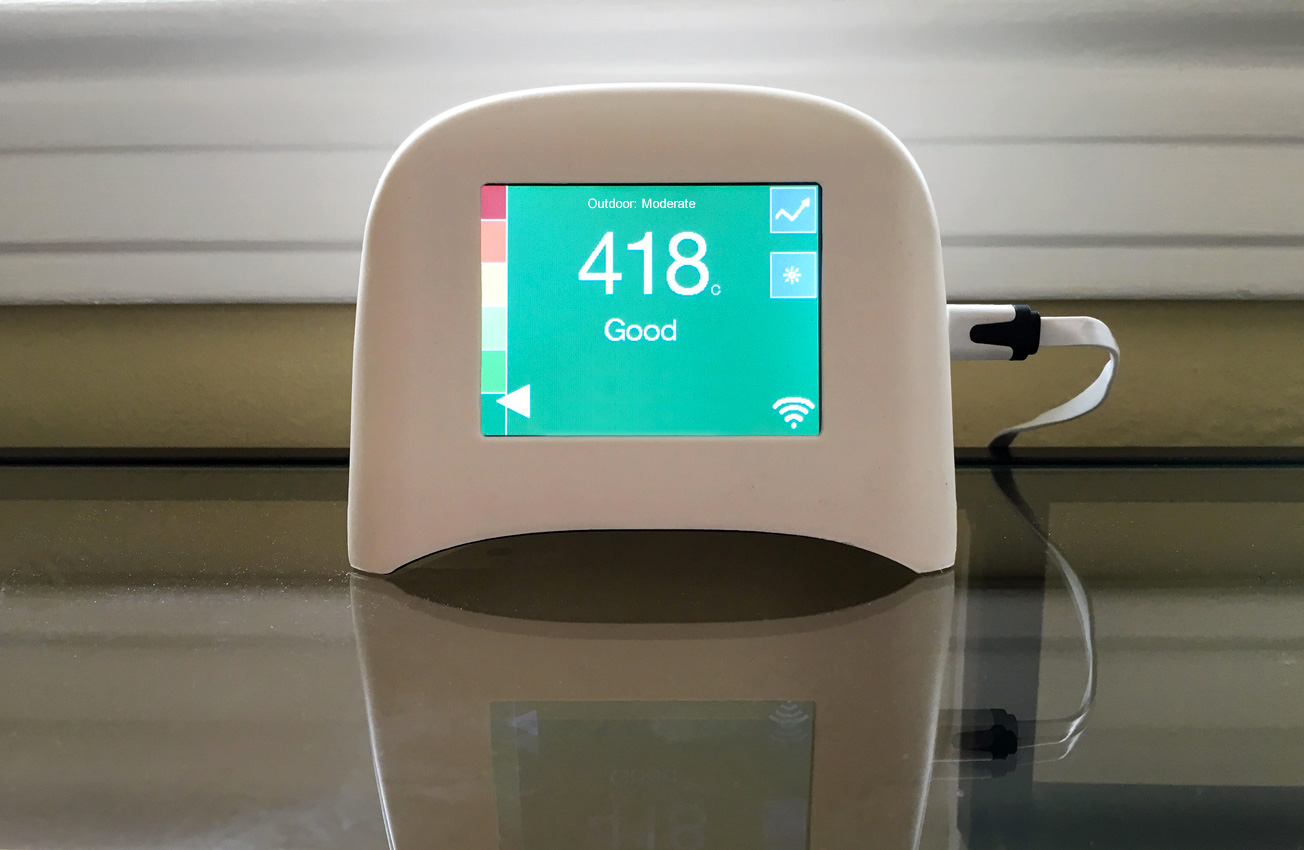
Airviz Inc. and the CREATE Lab of Carnegie Mellon University’s Robotics Institute developed Speck™, a small device that helps detect fine particulate matter in your indoor environment. 

Image via: www.specksensor.com
Clairton resident Cheryl Hurt, who owns a child daycare center, finds it particularly (no pun intended) helpful in a neighborhood located next to a coke plant. Speck allows her to determine when it is and isn’t a good day for the kids to go outside.

In addition, Clairton School District is one of the handful of schools that adopted a Speck and will have them available to check out from their library. With these Specks readily accessible, science and math teachers can use the sensors to teach air quality and statistics to their students through provided curricula.

Learn more from the CREATE Lab director, Illah Nourbakhsh. 


AIR MONITORING: BIKE EDITION

In addition to the Speck, Group Against Smog and Pollution (GASP) is studying particulate matter hotspots in Pittsburgh and you could help in the process! It’s a fairly simple commitment that involves strapping an air monitoring device on your bike while following a specific protocol. 

Image via: GASP
Once the equipment is attached to your bike, continue on your daily commute and GASP will then gather the obtained data to see where the problem areas in Pittsburgh are located, and suggest ways for improvement for your route. 

See what pollution has already been recorded from previous bikers.

REGIONAL AIR MONITORING

Do you notice the difference in air quality from day to day? Can you see it in the gif of the North Shore below? The Breathe Cam, a project of CMU's CREATE Lab in partnership with the Breathe Project, gives a regional view of air quality and shows comparisons of clear days and hazy days when fine particulate matter in the air is higher. 


The Breathe Project explains the science behind what we see, smell, and breathe each day and ways individuals, businesses, and governments can get involved to improve air quality for the region. The site's Breathe Meter also provides a side-by-side comparison of how Pittsburgh stacks up against cities throughout the nation in terms of air quality. Next time you notice a hazy sky, check out this resource. It might be pollution, not be your Instagram filter, that makes the skies look grey and tan instead of blue. 


What does this rise in technology and crowdsourcing mean?
This rise of technology and how organizations utilize new hands-on innovation tools could mean more than creating a general interest in environmental issues for citizens. It could have actual impact on environmental regulations. Seeing actual metrics and visuals before our eyes instead of what seemed to be intangible, invisible issues like air pollution will make us realize there IS a problem and we CAN do something about it. 

While the legislative process can seem tedious and lagging, especially with pressing environmental issues that need immediate action, these accessible tools can help us engage in these environmental issues without the slow assistance of government. This year, vow to be informed on what is going on around you in your own community and be a part of the solution! And who knows what technologies will be in store for the future.

Are you already using these tools or others? 
Let us know.

Do you suspect poor air quality in your area?
We want to hear your story.

Annie Regan is the western Pennsylvania outreach coordinator for PennFuture and is based in Pittsburgh. She tweets @MsAnnieRegan.  


Thursday, August 27, 2015

This will NOx your SOx off!

This is the first in a multi-part series on air quality.

What will NOx my SOx off, you ask? Well it’s this blog series on air quality, of course! For the next four weeks we will bring you lots of pictures and infographics to illustrate various aspects of air quality and why it’s important to care about the air you breathe.

We will cover the following topics:

1. Introduction to blog series and air pollutants
2. What Pennsylvania’s air looks like now
3. Different air quality standards and how they came about
4. Steps you can take to improve our air

First off, what exactly is air pollution? In short, it's the stuff that comes out of car tailpipes, industrial combustion stacks, and from aerosol cans, for example. Tiny particles, gases, and vapors are breathed deep into the lungs where they can make people sick. 

To understand air pollution, it helps to understand the key players. Let's stop here to look at some common air pollutants, where they come from, what their chemical composition is, and how they impact humans. For starters, NOx refers to any nitrous oxides, be it NO, NO2, NO3, etc. The same goes for sulfur oxides SO, SO2, SO3, etc. Each of the various oxides are emitted from the same pollution sources, but NO2 and SO2 are the most prevalent. 

One common form of air pollution is ground level ozone pollution (commonly referred to as smog), which forms when NOx emissions combine with volatile organic compounds in the presence of sunlight. In Pittsburgh, we see days where there is so much ozone pollution in the air that people with heart conditions, asthma and other lung diseases are unable to go outside.

Check out the infographic to learn more!

Nicole Catino is Penn Future’s 2015 Student Conservation Association Green Cities Sustainability Fellow and is based in Pittsburgh. 

Wednesday, August 19, 2015

Clairton Coke Works: Continuous improvement to the environment?

Clairton Coke Works is the largest coke manufacturing facility in the United States. The plant dumps toxic pollution into the air as it manufactures more than 4.7 million tons of coke, each year.


Located in Clairton, the mill sits along the Monongahela River, south of Pittsburgh.

Research from the University of Pittsburgh shows that air toxics, released from industrial facilities such as Clairton, increase the risk of cancer incidences over a wide geographic area.


Individuals living in Clairton and the surrounding communities report high rates of air pollution-associated health problems. Health concerns include cancer, asthma and lung disease.

The Environmental Protection Agency states that children, the elderly, those with chronic lung disease and asthma are especially affected by harmful air pollutants.


Clairton Coke Works continuously spews dangerous toxins into the air we breathe. Yet, U.S. Steel advertises that the plant continuously improves the environment.


What do you think? Concerned about air pollution and your health? Contact Valessa at souter-kline[at]pennfuture.org. We want to hear from you. 

Nikole Baker is a PennFuture intern based in Pittsburgh.

Wednesday, August 5, 2015

Code orange reminds us that air pollution is still a problem


On July 28, an air quality alert was in effect for the Pittsburgh region stemming from a sweltering heat wave across the U.S. This "code orange" alert is a warning to those sensitive to exposure such as children, people with respiratory diseases, and those who are active outdoors. During these extremely hot days, smog is a main health concern and can have detrimental effects on our lungs by irritating the respiratory system, reducing lung functioning, and aggravating asthma. 


According to the Environmental Protection Agency (EPA), smog is ground-level ozone that forms when harmful air pollutants, usually emitted from industrial and chemical plants as well as cars, chemically react with sunlight. This damaging chemical reaction, when trapped close to the earth’s surface, forms “bad ozone” (not all ozone is bad - that which is higher in the atmosphere protects us from damaging UV rays). Bad ozone is most often seen in cities around the country where air pollution emissions - and populations exposed to air pollution - are greatest. Numerous power plants and factories - including U.S. Steel’s Clairton Coke Works, the largest coke processing facility in the nation - are still operating in the Pittsburgh region and adding smog-forming pollution to our air

Fortunately, on Monday, August 3, 2015, President Obama and the EPA announced the Clean Power Plan as a vital effort to tackle climate change by cutting carbon emissions. This pollution, emitted from power plants along with other toxins, contributes to soot and smog. With more hot days on the horizon, smog will have a greater effect on all of us, particularly vulnerable populations.

The Clean Power Plan represents the action needed to minimize air pollution.

For more information on air pollution, take a look at this video on air quality and climate from our good friends at Communitopia.


Nikole Baker is a PennFuture intern based in Pittsburgh.

Wednesday, June 17, 2015

Allegheny SolarFest 2015

This weekend, when the sun is at its furthest point from the equator, us folks in the northern hemisphere will enjoy the longest day of the year.

More sunlight equals more time to spend in the beautiful outdoors and that's cause for celebration: Join us for the annual Allegheny SolarFest, this Saturday at Millvale Riverfront Park.

At this free, family-friendly event, you’ll be able to learn about solar initiatives in western PA and enjoy fun activities for the whole family. From electric cars and bikes to a rock climbing wall, they'll have it all. There will also be live music, food trucks, and local craft beer to keep you entertained throughout the day.

Swing by Allegheny SolarFest, rain or shine, between 11 a.m. and 4 p.m. this Saturday, June 20. Attendance is free but please register. And did we mention that the entire event will be powered by solar? How cool is that?!

Nicole Catino is Penn Future’s 2015 Student Conservation Association Green Cities Sustainability Fellow and is based in Pittsburgh.

Wednesday, June 10, 2015

Pittsburgh, a resilient city

Point State Park in Pittsburgh at Sunset
Point State Park at Sunset
From steel, to collapse, to a diverse knowledge and health-based economy, Pittsburgh has come to embody the definition of a resilient city. Our growing economy alone doesn't make this the vibrant city that it is, however. Pittsburgh’s rivers, trees and the air we breathe impact our health and well being. As climate change exacerbates bad air on hot days and brings more intense storms and extreme cold, protecting our environment will mean protecting our neighborhoods. Smart policies and planning now can turn environmental threats into impetus for bolstering healthy and cohesive communities.

That is what the Rockefeller Foundation saw in our city when they selected Pittsburgh to be one of only 100 Resilient Cities, worldwide. 

100 Resilient Cities provides resources and guidance for an active network of urban hubs throughout the world. The first group of 32 cities began work in December 2013 and the second group was announced in December 2014. Of the 331 applications for the second round, Pittsburgh was one of 35 to be selected and PennFuture is thrilled to be part of the local collaboration to make our city stronger.

On June 6, we met with other stakeholders from the private, public, and nonprofit sectors for an agenda-setting workshop. The conversations were eclectic and electric, and centered around key urban concerns (both chronic and acute), many of which overlap with our environmental efforts, including:
  • Infrastructure failure and flooding concerns (in addition to safety concerns, flooding equals raw sewage in our streams and rivers -- where we boat, swim and get our drinking water).
  • Hazardous materials accidents (oil bomb trains, anyone?
  • Heat waves (unhealthy ozone pollution is expected to get worse as summers get hotter)
  • Significant environmental degradation (clean air, clean water and healthy land: the building blocks of life
With our own holistic mission to create a just future where nature, communities and the economy thrive, we at PennFuture are very excited about Pittsburgh’s participation in the 100 Resilient Cities effort. It makes sense and the time is ripe.

Nicole Catino is PennFuture's 2015 Student Conservation Association Green Cities Sustainability Fellow and is based in Pittsburgh.

Wednesday, May 13, 2015

C'mon, hop to it! Come to PennFuture On Tap!


Photo of a Pilsner glass filled with beer, etched with the PennFuture logo, and hops flowers around its base
Please join us for a great night of good beer and tasty food at our premiere PennFuture on Tap* event.

We'll host this fundraiser at Yards Brewery Company, the first brewery in Pennsylvania to be  completely powered by wind, from 7:30 p.m. - 10:30 p.m. on Friday, June 19. 

Support local sustainable businesses and PennFuture when you purchase your tickets on our secure website and then watch our tagline -- Every environmental victory grows the economy -- come to life at this unique event venue. 

Pennsylvania's growing craft brewery industry -- ranked fourth in the U.S. by the Brewers Association -- contributes $2 billion annually to our economy and provides over 20,000 Pennsylvania jobs.

To make all that beer, the brewing industry needs lots of clean air and clean water. That's where we come in: PennFuture works hard every day to protect these resources for all of us. And that's where you come in: To help PennFuture continue this work, we need YOU and your support!

Our special guest will be Philadelphia Water Department Commissioner Howard Neukrug, a national leader in urban sustainability and the creator of Philadelphia’s Green City, Clean Waters program. Alongside Commissioner Neukrug's leadership, the Philadelphia Water Department provides clean drinking water and integrated wastewater and stormwater services for more than 2.3 million people.

Please join us. Learn something new. Enjoy an open bar with Yards' Revolution and Signature Ales. Sample food from Guerilla Ultima Food Truck. Take a brewery tour and bid on something wonderful in the silent auction.

Sponsorships are available. For more information on that, email Susanne Whitehead at whitehead@pennfuture.org.

Don't miss this hopportunity (last pun, promise) to support PennFuture -- and have a great time while you do it! Buy your tickets today!

*Must be 21 years old to participate.

Mary Kane is development associate for PennFuture and is based in Harrisburg.