PF Nav/HeadImage

PennFuture Facts :: brief, interesting looks at topical environmental issues PennFuture Facts :: brief, interesting looks at topical environmental issues
Showing posts with label air pollution. Show all posts

Monday, April 18, 2016

On their terms: residents combat poor air quality to #CleanUpClairton

Although regulatory agencies are required to protect public health by enforcing federal air quality standards set by the Environmental Protection Agency (EPA), we find that in reality that may not always be the case. 

For example, 20 miles south of Pittsburgh, residents of the City of Clairton are questioning whether a recent settlement with the largest coke producer in North America will protect public health.

"We've seen the consent agreements between U.S. Steel's Clairton Coke Works and the health department over the past several years that I have lived here, and, frankly, the air quality has not changed," said Clairton resident, Pat Jones. "We are skeptical." 

With the lack of community trust that regulatory agencies are creating a path toward a healthier, livable environment, residents are taking matters into their own hands. We outline some ways community members in and around the City of Clairton are combatting poor air quality on their own terms.

Smoke School

Recently, Eastern Technical Associates (ETA) offered a free Visible Emissions Certification program, or "smoke school." This type of program is required by the EPA in order for an individual to be recognized as a qualified observer of stationary emissions sources, like U.S. Steel's Clairton Coke Works. 

The class took place at Settlers Cabin Park on an early Tuesday morning. ETA brought their smoke machine and demonstrated the various different opacity levels from both black and white smoke emissions. Each participant would fill in estimated opacity levels on a zero to 100 scale for each round of testing. The test is harder than it looks - most participants went through three rounds before passing the test. 

Chris Harper, an electrical engineer from Edgewood, has been a certified smoke reader for a couple years. He uses his certification to be a citizen watchdog over Clairton Coke Works, because he says the pollution plumes affect his community. 

Harper also publishes an online air quality dashboard for others to see what is going on throughout the region. 

Speck Monitors

Carnegie Mellon University's CREATE Lab is using technology to foster citizen engagement in air quality. Through spinoff, Airviz, knowing what is in the air you breathe is as easy as borrowing a book from your local library. 

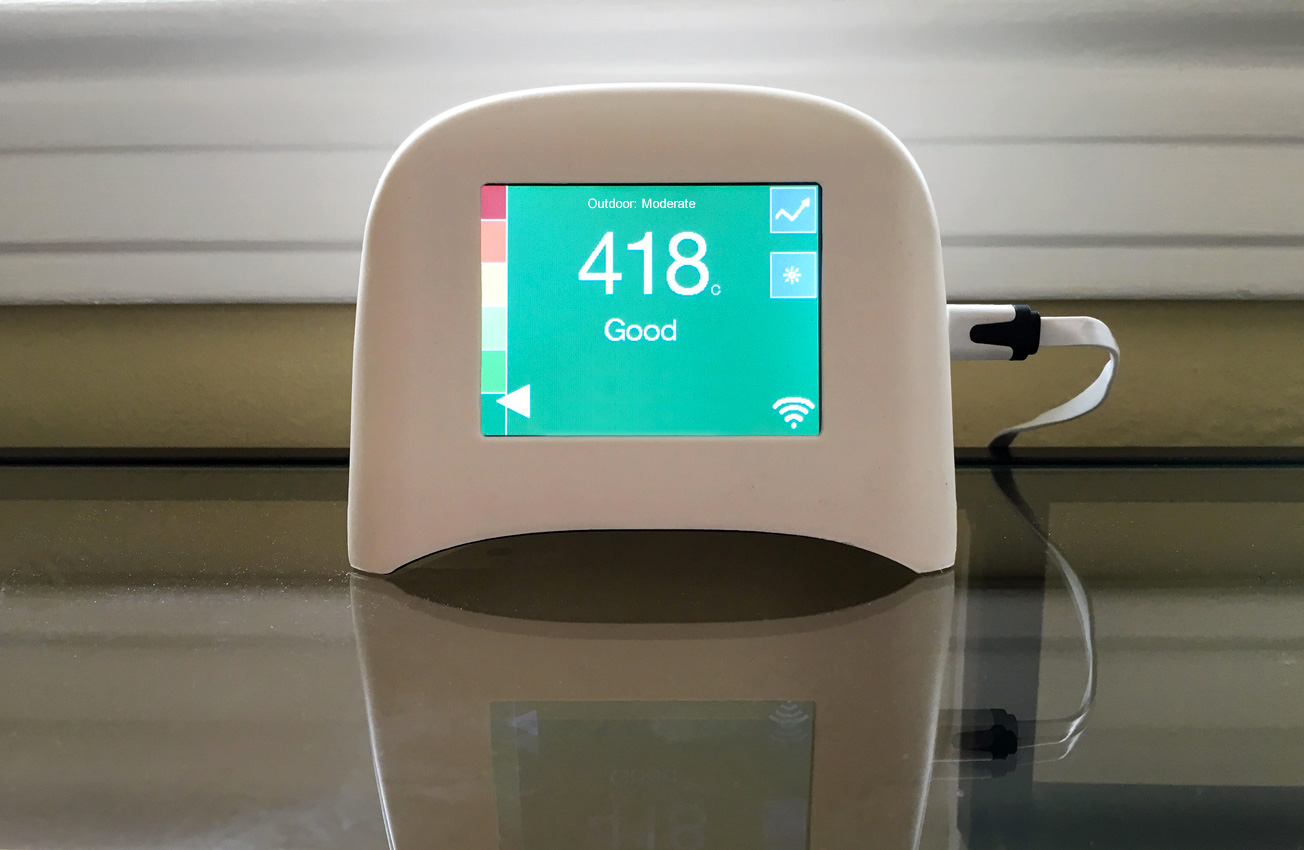
This month, Airviz donated 10 Specks - monitors that detect particulates in homes and workplaces - to the Clairton Public Library

Odessa Ellis, children's services coordinator for the library, said she is very excited about having the Specks and plans to incorporate them into children's programs and hopes parents will check them out for home use. 
Clairton Public Library's Odessa Ellis, Freda Montgomery, and Audrey Minarcik show off the library's new Speck sensors.
Clairton School District, Southside Human Resource Community Center, and a locally owned and operated Clairton daycare center have already adopted Specks.

Student Activism 

As community groups and residents in the Mon Valley area are working toward monitoring the air quality, younger residents are contributing to spreading awareness of the issue. With a large percentage of Clairton students having asthma, air quality is a major concern for them. 

High school students of Stay Positive Clairton, a project of Youth Opportunites Development, are learning to spread the word of about air quality in their neighborhood. Partnering with environmental groups like PennFuture and PennEnvironment, they are preparing to gather signatures for a petition to the Allegheny County Health Department during community events like basketball games as well as door-to-door canvassing. 

Stay Positive Clairton's program director, Brandon Ziat, says that the petition is a great leadership opportunity for kids to build leadership skills and shape their community. 

"Every day when I drive to work with the kids, I see the plant. Air pollution is a constant worry and it's great to know that something is being done about it and kids can get involved," added Ziat. 

Do you suspect poor air quality in your area? 
We want to hear your story. 

Annie Regan is the western Pennsylvania outreach coordinator for PennFuture and is based in Pittsburgh. She tweets @MsAnnieRegan. 

Thursday, March 10, 2016

How crowdsourcing and technology are democratizing air quality monitoring

Allegheny County’s air ranks among the worst counties nationally for cancer risk. And our recent notice of legal action shows that businesses and regulatory agencies don’t always act in the best interest of public health. 

But what recourse do we have?
The federal Clean Air Act enables organizations like PennFuture to file citizen suits against polluters on behalf of its members.

But what else can we do?
Innovations and evolving technology allow people to become more informed and vocal about what’s in their environment. From social media to monitoring devices, residents can test their own air and water quality and push that information out like never before. 

How can you learn about what’s in your air?

INDOOR AIR MONITORING

Airviz Inc. and the CREATE Lab of Carnegie Mellon University’s Robotics Institute developed Speck™, a small device that helps detect fine particulate matter in your indoor environment. 

Image via: www.specksensor.com
Clairton resident Cheryl Hurt, who owns a child daycare center, finds it particularly (no pun intended) helpful in a neighborhood located next to a coke plant. Speck allows her to determine when it is and isn’t a good day for the kids to go outside.

In addition, Clairton School District is one of the handful of schools that adopted a Speck and will have them available to check out from their library. With these Specks readily accessible, science and math teachers can use the sensors to teach air quality and statistics to their students through provided curricula.

Learn more from the CREATE Lab director, Illah Nourbakhsh. 


AIR MONITORING: BIKE EDITION

In addition to the Speck, Group Against Smog and Pollution (GASP) is studying particulate matter hotspots in Pittsburgh and you could help in the process! It’s a fairly simple commitment that involves strapping an air monitoring device on your bike while following a specific protocol. 

Image via: GASP
Once the equipment is attached to your bike, continue on your daily commute and GASP will then gather the obtained data to see where the problem areas in Pittsburgh are located, and suggest ways for improvement for your route. 

See what pollution has already been recorded from previous bikers.

REGIONAL AIR MONITORING

Do you notice the difference in air quality from day to day? Can you see it in the gif of the North Shore below? The Breathe Cam, a project of CMU's CREATE Lab in partnership with the Breathe Project, gives a regional view of air quality and shows comparisons of clear days and hazy days when fine particulate matter in the air is higher. 


The Breathe Project explains the science behind what we see, smell, and breathe each day and ways individuals, businesses, and governments can get involved to improve air quality for the region. The site's Breathe Meter also provides a side-by-side comparison of how Pittsburgh stacks up against cities throughout the nation in terms of air quality. Next time you notice a hazy sky, check out this resource. It might be pollution, not be your Instagram filter, that makes the skies look grey and tan instead of blue. 


What does this rise in technology and crowdsourcing mean?
This rise of technology and how organizations utilize new hands-on innovation tools could mean more than creating a general interest in environmental issues for citizens. It could have actual impact on environmental regulations. Seeing actual metrics and visuals before our eyes instead of what seemed to be intangible, invisible issues like air pollution will make us realize there IS a problem and we CAN do something about it. 

While the legislative process can seem tedious and lagging, especially with pressing environmental issues that need immediate action, these accessible tools can help us engage in these environmental issues without the slow assistance of government. This year, vow to be informed on what is going on around you in your own community and be a part of the solution! And who knows what technologies will be in store for the future.

Are you already using these tools or others? 
Let us know.

Do you suspect poor air quality in your area?
We want to hear your story.

Annie Regan is the western Pennsylvania outreach coordinator for PennFuture and is based in Pittsburgh. She tweets @MsAnnieRegan.  


Thursday, September 17, 2015

What’s the state of Pennsylvania's air?

This is the second post in a four-part blog series on air quality.

Now that you have a solid understanding of air pollutants it’s time to look at what is in the air you (yes, you) are breathing at home. We compiled data from the U.S. Environmental Protection Agency for eight cities throughout Pennsylvania and put it into an interactive infographic. Check out how your region stacks up!

If you don’t live in Pennsylvania or are just curious to see how other cities in the USA compare, our friends at the Breathe Project (based in Pittsburgh) have created an interactive Breathe Meter. As you can tell, there’s still a lot to clean up in order to make sure the air we’re breathing isn’t harming our health.

Stay tuned for the next post in this series to find out who makes the standards and how they were established.

Nicole Catino is Penn Future’s 2015 Student Conservation Association Green Cities Sustainability Fellow and is based in Pittsburgh. 

Thursday, August 27, 2015

This will NOx your SOx off!

This is the first in a multi-part series on air quality.

What will NOx my SOx off, you ask? Well it’s this blog series on air quality, of course! For the next four weeks we will bring you lots of pictures and infographics to illustrate various aspects of air quality and why it’s important to care about the air you breathe.

We will cover the following topics:

1. Introduction to blog series and air pollutants
2. What Pennsylvania’s air looks like now
3. Different air quality standards and how they came about
4. Steps you can take to improve our air

First off, what exactly is air pollution? In short, it's the stuff that comes out of car tailpipes, industrial combustion stacks, and from aerosol cans, for example. Tiny particles, gases, and vapors are breathed deep into the lungs where they can make people sick. 

To understand air pollution, it helps to understand the key players. Let's stop here to look at some common air pollutants, where they come from, what their chemical composition is, and how they impact humans. For starters, NOx refers to any nitrous oxides, be it NO, NO2, NO3, etc. The same goes for sulfur oxides SO, SO2, SO3, etc. Each of the various oxides are emitted from the same pollution sources, but NO2 and SO2 are the most prevalent. 

One common form of air pollution is ground level ozone pollution (commonly referred to as smog), which forms when NOx emissions combine with volatile organic compounds in the presence of sunlight. In Pittsburgh, we see days where there is so much ozone pollution in the air that people with heart conditions, asthma and other lung diseases are unable to go outside.

Check out the infographic to learn more!

Nicole Catino is Penn Future’s 2015 Student Conservation Association Green Cities Sustainability Fellow and is based in Pittsburgh. 

Wednesday, August 19, 2015

Clairton Coke Works: Continuous improvement to the environment?

Clairton Coke Works is the largest coke manufacturing facility in the United States. The plant dumps toxic pollution into the air as it manufactures more than 4.7 million tons of coke, each year.


Located in Clairton, the mill sits along the Monongahela River, south of Pittsburgh.

Research from the University of Pittsburgh shows that air toxics, released from industrial facilities such as Clairton, increase the risk of cancer incidences over a wide geographic area.


Individuals living in Clairton and the surrounding communities report high rates of air pollution-associated health problems. Health concerns include cancer, asthma and lung disease.

The Environmental Protection Agency states that children, the elderly, those with chronic lung disease and asthma are especially affected by harmful air pollutants.


Clairton Coke Works continuously spews dangerous toxins into the air we breathe. Yet, U.S. Steel advertises that the plant continuously improves the environment.


What do you think? Concerned about air pollution and your health? Contact Valessa at souter-kline[at]pennfuture.org. We want to hear from you. 

Nikole Baker is a PennFuture intern based in Pittsburgh.

Wednesday, August 5, 2015

Code orange reminds us that air pollution is still a problem


On July 28, an air quality alert was in effect for the Pittsburgh region stemming from a sweltering heat wave across the U.S. This "code orange" alert is a warning to those sensitive to exposure such as children, people with respiratory diseases, and those who are active outdoors. During these extremely hot days, smog is a main health concern and can have detrimental effects on our lungs by irritating the respiratory system, reducing lung functioning, and aggravating asthma. 


According to the Environmental Protection Agency (EPA), smog is ground-level ozone that forms when harmful air pollutants, usually emitted from industrial and chemical plants as well as cars, chemically react with sunlight. This damaging chemical reaction, when trapped close to the earth’s surface, forms “bad ozone” (not all ozone is bad - that which is higher in the atmosphere protects us from damaging UV rays). Bad ozone is most often seen in cities around the country where air pollution emissions - and populations exposed to air pollution - are greatest. Numerous power plants and factories - including U.S. Steel’s Clairton Coke Works, the largest coke processing facility in the nation - are still operating in the Pittsburgh region and adding smog-forming pollution to our air

Fortunately, on Monday, August 3, 2015, President Obama and the EPA announced the Clean Power Plan as a vital effort to tackle climate change by cutting carbon emissions. This pollution, emitted from power plants along with other toxins, contributes to soot and smog. With more hot days on the horizon, smog will have a greater effect on all of us, particularly vulnerable populations.

The Clean Power Plan represents the action needed to minimize air pollution.

For more information on air pollution, take a look at this video on air quality and climate from our good friends at Communitopia.


Nikole Baker is a PennFuture intern based in Pittsburgh.

Wednesday, July 29, 2015

Is your community hazardous to your health? New map can tell you.

Recently, the U.S. Environmental Protection Agency (EPA) released EJSCREEN, a free, online environmental justice screening and mapping tool. EJSCREEN pairs maps along with demographic and pollution data to identify communities that face the greatest risks from air pollution, lead paint, hazardous waste sites, traffic congestion, and other hazards.

According to EPA, Environmental Justice is “the fair treatment and meaningful involvement of all people regardless of race, color, national origin, or income with respect to the development, implementation, and enforcement of environmental laws, regulations, and policies. It will be achieved when everyone enjoys the same degree of protection from environmental and health hazards and equal access to the decision-making process to have a healthy environment in which to live, learn, and work.”

EJSCREEN allows anyone to look up their level of environmental risk and compare it to the rest of the state, EPA region, or nation. The reports and charts generated by EJSCREEN allow users to better understand which areas need increased environmental protection, infrastructure improvements, and climate resilience. This information can provide support for educational programs, grant writing, and community awareness efforts so that the public can participate meaningfully in decision-making processes that impact their health and environment.
The tool is easy enough to use and can be accessed at http://www2.epa.gov/ejscreen . There’s also a user guide  to help you get started. EPA wants you, the public, to use the tool and provide feedback so  they can improve EJSCREEN. You can provide feedback here.

Jen Quinn is central Pennsylvania outreach coordinator for PennFuture and is based in Harrisburg. She tweets @QuinnJen1.

Wednesday, June 10, 2015

Pittsburgh, a resilient city

Point State Park in Pittsburgh at Sunset
Point State Park at Sunset
From steel, to collapse, to a diverse knowledge and health-based economy, Pittsburgh has come to embody the definition of a resilient city. Our growing economy alone doesn't make this the vibrant city that it is, however. Pittsburgh’s rivers, trees and the air we breathe impact our health and well being. As climate change exacerbates bad air on hot days and brings more intense storms and extreme cold, protecting our environment will mean protecting our neighborhoods. Smart policies and planning now can turn environmental threats into impetus for bolstering healthy and cohesive communities.

That is what the Rockefeller Foundation saw in our city when they selected Pittsburgh to be one of only 100 Resilient Cities, worldwide. 

100 Resilient Cities provides resources and guidance for an active network of urban hubs throughout the world. The first group of 32 cities began work in December 2013 and the second group was announced in December 2014. Of the 331 applications for the second round, Pittsburgh was one of 35 to be selected and PennFuture is thrilled to be part of the local collaboration to make our city stronger.

On June 6, we met with other stakeholders from the private, public, and nonprofit sectors for an agenda-setting workshop. The conversations were eclectic and electric, and centered around key urban concerns (both chronic and acute), many of which overlap with our environmental efforts, including:
  • Infrastructure failure and flooding concerns (in addition to safety concerns, flooding equals raw sewage in our streams and rivers -- where we boat, swim and get our drinking water).
  • Hazardous materials accidents (oil bomb trains, anyone?
  • Heat waves (unhealthy ozone pollution is expected to get worse as summers get hotter)
  • Significant environmental degradation (clean air, clean water and healthy land: the building blocks of life
With our own holistic mission to create a just future where nature, communities and the economy thrive, we at PennFuture are very excited about Pittsburgh’s participation in the 100 Resilient Cities effort. It makes sense and the time is ripe.

Nicole Catino is PennFuture's 2015 Student Conservation Association Green Cities Sustainability Fellow and is based in Pittsburgh.

Wednesday, April 22, 2015

Speak up at public hearings on oil and gas regulations

On April 4, 2015, the Pennsylvania Department of Environmental Protection (DEP) issued a “Notice of Final Rulemaking” regarding the state’s updated oil and gas regulations (Chapter 78 and 78a). Over a year ago, the state sought public input on proposed requirements for oil and gas operations and received over 24,000 comments. Some of those comments were incorporated into the revised rule, which was released this month.

The DEP will hold three public hearings on these latest revisions. This is our last chance to weigh in on Chapter 78 and 78a of the PA code (78a, which addresses unconventional “fracked” wells, begins on page 121).

Add your voice at the upcoming hearings to submit concerns about the final rule and to show your support for strong drilling standards. We need our regulators to prioritize our health and communities – to reduce toxic air pollution, preserve our waterways and prevent the harmful fragmentation of our natural lands. 

Listed below are a few of our comments and concerns. We continue to review the proposed rule and will incorporate updates here. You are welcome to use these points to guide your testimony. Feel free to contact us at souter-kline [at] pennfuture.org, with any questions.

PennFuture Chapter 78 and 78a rulemaking comments and concerns:

  • We support the DEP’s decision to prohibit new on-site pits for storage of flowback wastewater at unconventional operations, and to require those pits that are currently in use to be closed. 
  • The revised rule makes clear that earth disturbance operations must comply with the agency’s Chapter 102 regulations, use best management practices for erosion and sedimentation control and stormwater management, and incorporate the agency’s forest buffer guidance. Further, unconventional well operators that propose to work in a high quality or exceptional value watershed must comply with the anti-degradation requirements of Chapter 102.These improvements will help to protect our most pristine waterways from degradation due to erosion and deforestation. 
  • The revised rule recognizes that schools and playgrounds are important public resources, and requires an operator proposing to locate a well within 200 feet to demonstrate what will be done to avoid or mitigate harm to that resource. PennFuture continues to have serious concerns about the impact of air pollution caused by shale gas drilling operations on our children. Young lungs are especially vulnerable to pollution and we would like to see expanded buffers around schools. 
  • PennFuture supports the proposal that any affected drinking water supplies must be restored either to Safe Drinking Water Act (SDWA) standards or, if pre-existing water quality was higher than SDWA standards, to the better pre-existing condition.
  • While we support including a noise mitigation plan requirement, we are concerned that the provision will not result in meaningful noise reduction or control at well sites. As outlined, the noise requirement is vaguely worded and fails to set an objective standard for evaluating problems, making it difficult, if not impossible, to assess compliance. 
Valessa Souter-Kline is western Pennsylvania outreach coordinator for PennFuture and is based in Pittsburgh. She tweets @ValessaSK.

Wednesday, April 15, 2015

Let's clean up Cheswick Power Plant and our air

Photo of Cheswick Power Plant from the author's home
On April 2, 2015, community members met in Springdale, Pa. along with PennFuture partner organizations including Sierra Club, GASP and Women for a Healthy Environment to discuss the impact that pollution from the Cheswick Power Plant has made on the local community and the county. NRG Energy, one of the largest owners of coal burning power plants in the United States, owns the Cheswick plant. In 2013, the plant was the largest major point source of air pollution in Allegheny County.

Major point source pollution makes a major impact on a community. In 2010, the Pittsburgh Post-Gazette reported that Cheswick’s mortality rate was 87 percent over the national average with diseases linked to air pollution such as cardiovascular disease, COPD, and asthma. Allegheny County has some of the highest rates for asthma in the states and a growing number of cases in children

Allegheny County currently violates federal safeguards for particulate and smog standards of the Clean Air Act.The Cheswick Power Plant is a source of nitrogen oxides and sulfur dioxide in the county. In 2013, the plant accounted for half of the nitrogen oxide pollution in the county and was the third largest contributor of fine particles. Upgrades at the plant to limit emissions have helped but Cheswick continues to rank among the highest polluters in the county.Though not a violation, the plant's sulfur output has almost tripled between 2013 and 2014, a worrisome trend. 

There are limits to the amount of nitrogen oxides and sulfur dioxide that a power plant can emit. To meet those limits, plants can install and run pollution control technology or, in some cases, purchase credits to pollute. Currently, Cheswick’s permit allows the facility to emit unhealthy smog-forming pollution (NOx) at a rate that exceeds the capacity of the technology installed to control that pollution. Worse yet, the plant does not consistently run the pollution control technology that is installed onsite. This has contributed to the region’s ongoing elevated smog levels, which continue to violate federal safeguards. 

The Title V permit for the Cheswick Power Plant expires at the end of 2015. These permits are required under the Clean Air Act to establish pollution limits for large emission sources. Environmental groups in the region are reaching out to the Allegheny County Health Department to strengthen the polluting limits of the plant. The permit will be drafted this summer and meetings will be held to collect public input. If you'd like to get involved, email Valessa Souter-Kline (souter-kline[at]pennfuture.org) or add your name to Sierra Club's email campaign to clean up the Cheswick Power Plant.

Guest post by Courtney Mahronich, Project Coordinator for the Trail Town Program and PennFuture volunteer extraordinaire. Courtney lives near the Cheswick Power Plant.

Wednesday, January 28, 2015

Video: Energy switching in six minutes: Part 1

Pop quiz! Ready?

Who is your electricity supplier?

      A) My local utility
      B) A renewable energy supplier in Pennsylvania 

If you answered B, give yourself a pat on the back. Simply by paying your bill every month, you are helping ensure that Pennsylvanians have clean, healthy air to breathe. Our lungs thank you. 

If you answered A, maybe now is the time to consider making the switch. 

Energy Switching Series,created by Nicole Catino for PennFuture
Much of Pennsylvania's electricity comes from coal-fired power plants, which spew pollution into our air. Unhealthy levels of air pollution in Pennsylvania contribute to asthma, COPD, lung disease and even cancer. 

While individuals and organizations (including PennFuture) work to ensure that our air is protected, you too can take a step to increase clean energy generation. You can choose to buy your electricity from renewable wind and solar sources, right here in Pennsylvania. Want to know more? This three-minute video outlines why energy switching matters.

Valessa Souter-Kline is western Pennsylvania outreach coordinator for PennFuture and is based in Pittsburgh. She tweets @ValessaSK.

Wednesday, October 22, 2014

University of Pittsburgh research links autism to air pollution

A new study was released Wednesday showing a link between autism spectrum disorders and maternal exposure to toxic air pollution during pregnancy. The study was conducted by the University of Pittsburgh and the results add to a growing body of research pointing to a correlation between exposure to air pollution and incidence of human neurodevelopmental disorders.

We know that air pollutants such as particulate matter and ozone negatively impact our health by increasing rates of asthma and cardiovascular disease, and they are even being correlated to cancer. This new study shows that air toxics may be hurting us in another way, as well. The fact is that the prevalence of autism spectrum disorders among children in Pennsylvania more than doubled between 2002 and 2008, according to the Centers for Disease Control and Prevention. That increase is likely too large to be explained by genetics alone, leading researchers to look for environmental factors. It is becoming increasingly clear that air pollution in our state may well be contributing to a significant public health problem.

In this particular study, researchers conducted a population-based control study in six counties in southwestern Pennsylvania, estimating the association between autism spectrum disorders and 30 known neurotoxicants. Their research found that exposure to chromium, cyanide, styrene and other toxic air pollutants during gestation and a child's early years of life increased the risk of being diagnosed with an autism spectrum disorder.

Enough is enough. We in southwestern Pennsylvania have been breathing unhealthy air for decades. Progress toward ensuring that everyone can exercise and play outside without risking their well being has been far too slow. Let's act now to find innovative solutions to the pollution problem. Bottom line: We all deserve to breathe clean, healthy air.

Valessa Souter-Kline is PennFuture's western Pennsylvania outreach coordinator and is based in Pittsburgh. She tweets @ValessaSK.

VIDEO: "Methane Matters: PA Needs to Know"

You've got questions and we've got answers. What is methane? Why is it leaking from Pennsylvania's natural gas operations? Why is methane such a threat to climate change? Check out this whiteboard animation video for a helpful primer -- then share it with friends.  


Methane Matters: PA Needs to Know from PennFuture on Vimeo.

Wednesday, October 8, 2014

In Pittsburgh, it’s all about AIR

NEXT Pittsburgh recently published an article entitled “5 Challenges Facing Pittsburgh and what we’re doing about them,” and air pollution was number one on the list. Air pollution is a complex problem, to say the least (Dr. Neil Donahue at CMU explains just how complex on Essential Pittsburgh). Car exhaust as well as diesel from trucks, buses and industrial facilities all contribute to unhealthy levels of particle pollution and toxics – emissions that are known or suspected of causing cancer, birth defects, neurological problems and other serious health risks – in the air we breathe.

If you’ve been paying attention in Pittsburgh, the fact that air pollution remains a problem, even as we move away from the city’s industrial past, will come as no surprise. Both the Post-Gazette and Trib have published stories on air pollution this fall and the local National Public Radio station, WESA, spent another hour last Wednesday addressing the harmful impact of pollution from DTE’s Shenango Coke plant on the surrounding community. During the WESA radio show, the Deputy Director of Environmental Health at the Allegheny County Health Department articulated the problem well when he pointed out that, inevitably, an industrial  coke plant, located in a densely populated area, is going to put a “significant burden” on the surrounding community. The question, then, is does the community have a say in reducing that burden? 

In August, the Allegheny County Health Department signed a consent order and agreement with U.S. Steel's Clairton plant, fining the facility for daily violations and outlining a timeline for compliance with no public involvement. There was no notification and there were no public meetings. U.S. Steel was given the opportunity to negotiate just how long they can continue to dump unhealthy levels of pollution into the air but the people who live, work and play in the shadow of the plant, battling higher than average rates of asthma, cancer and respiratory illnesses, had no say.

As the steel city continues to become a tech city, we need to re-examine the cost of our ongoing industrial legacy. Right now, residents and clean businesses, which struggle to attract employees to a region with some of the worst air in the country, are paying the price. It’s high time we shifted that burden onto the polluters themselves.

Want to get involved and speak out against unhealthy air in our region? Email me at souter-kline [at] pennfuture.org.

Valessa Souter-Kline is PennFuture's western Pennsylvania outreach coordinator and is based in Pittsburgh. She tweets @ValessaSK.

Wednesday, September 17, 2014

Energy savings in Allegheny County – good for you AND the environment

Success! Black and Gold City Goes Green Neighborhood Blitz in Elliott

Last Saturday, ten courageous volunteers braved a rainy early- autumn morning to hand out energy-saving toolkits to residents in Elliott, a neighborhood in Pittsburgh’s West End. Luckily for us, the weather cleared up, the community was very receptive, and we handed out a total of 187 bags, making this one of the most successful blitzes PennFuture has organized over the past five years.

The collective energy savings from utilizing the contents of the bag (which includes CFL and LED light bulbs, LED night lights, smart power strips, window caulk, and more) is more than 730,000 pounds of CO2. That’s like taking 70 cars off the road or planting 8,546 trees. We are very grateful to the volunteers who helped accomplish this feat, to Chipotle Mexican Grill for nourishing our hard workers, and to Elliott Community Group for their support in organizing the event.

Sad you missed the Elliot Blitz? The following program summaries outline additional ways you can reduce your carbon footprint while helping to clean up Allegheny County's air.

Duquesne Light Home Energy Audit Program

Duquesne Light recently launched its Whole House Energy Audit Program (WHEAP), which provides a rebate for residential customers in single-family homes who get a professional audit of their home’s energy use. A typical home energy audit costs around $400 but this program allows you to get the same detailed analysis for only $149 after taking advantage of Duquesne Light’s Watt Choices $250 rebate. Further, if you meet the income-eligibility guidelines, you will receive the audit at no cost. Ensuring your house is properly insulated, installing efficient lighting, and that heating/cooling systems are functioning correctly will help you save money and reduce your energy use.

GTECH Healthy Homes

Looking to retrofit your home in order to make it more energy efficient? As part of its Healthy Homes Incentive Program (HHIP), GTECH Strategies is providing an additional $2,500 for home energy efficiency investments once you spend $5,000 or more. By being able to delve even deeper into energy improvements, you can ensure that your home is performing with the utmost quality and efficiency. GTECH’s terrific team will be there to help identify your needs, guide you through the energy efficiency marketplace, and help you choose a financing option that works for you.

Allegheny County Health Department – Wood Stove Bounty Collection event

Calling all Allegheny County residents who are owners of uncertified wood stoves or wood-fired boilers! You can get some ca$h by recycling your old appliances next Saturday, September 27 from 1-4pm at the Wave Pool Parking Lot, Boyce Park. The Allegheny County Health Department is organizing the collection event and they're offering $200 gift cards in exchange for uncertified wood stoves and $500 cash incentives for non-Phase-II compliant outdoor wood-fired boilers. In order to participate, you need to register in advance and be able to deliver and unload the stoves or boilers on your own.

Take advantage of these programs if you can and, if you can't, make sure you're using CFL light bulbs or, better yet, LEDs at home. The less energy we use, the less we need to generate.

Nicole Catino is PennFuture's 2014 Student Conservation Association Green Cities Sustainability Fellow and is based in Pittsburgh.

Wednesday, April 30, 2014

As the wind blows

Good news for clean air: On Tuesday, the U.S. Supreme Court upheld the Environmental Protection Agency’s (EPA) Transport Rule. The rule requires that 28 states, which contribute significantly to downwind non-attainment of National Ambient Air Quality Standards (NAAQS), reduce their emissions in accordance with economic feasibility, as determined by the EPA. 

The decision is a strong statement in favor of clean air and human health and against unmitigated air pollution.


For decades, as outlined in the SCOTUSblog, the EPA has struggled to effectively implement the “good neighbor policy” first issued in 1977, and updated in 1990, which seeks to require states to manage their own pollution rather than passing it along to others.  

The crux of the problem is that air pollution doesn't abide by political boundaries. Nor do airborne particles shift uniformly across borders. Instead, prevailing winds flow from west to east in the U.S. For this reason, many eastern states contend with dangerous air pollution blown in from neighboring power plants, along with the particles and ozone generated from their own sources. Particle pollution and ozone are directly linked to increased rates of asthma and other cardiovascular health problems, in addition to climate change.  

Because states can’t regulate sources outside of their boundaries, federal level coordination is necessary in order to ensure that states that rely primarily on coal fired power plants (the dirtiest source of energy available) don't sit back and enjoy artificially cheap power by transferring the health and clean-up costs to citizens and governments downwind.

Curious to know where Pennsylvania stands? The Tribune outlined our state's position back in 2013: Squarely in the middle.

Now that you've made it to here, reward yourself by enjoying this mesmerizing wind map, which may or may not oblige me by illustrating the prevailing wind. 

Valessa Souter-Kline is PennFuture's western Pennsylvania outreach coordinator and is based in Pittsburgh. She tweets at @ValessaSK.