PF Nav/HeadImage

PennFuture Facts :: brief, interesting looks at topical environmental issues PennFuture Facts :: brief, interesting looks at topical environmental issues
Showing posts with label air pollutants. Show all posts

Thursday, March 10, 2016

How crowdsourcing and technology are democratizing air quality monitoring

Allegheny County’s air ranks among the worst counties nationally for cancer risk. And our recent notice of legal action shows that businesses and regulatory agencies don’t always act in the best interest of public health. 

But what recourse do we have?
The federal Clean Air Act enables organizations like PennFuture to file citizen suits against polluters on behalf of its members.

But what else can we do?
Innovations and evolving technology allow people to become more informed and vocal about what’s in their environment. From social media to monitoring devices, residents can test their own air and water quality and push that information out like never before. 

How can you learn about what’s in your air?

INDOOR AIR MONITORING
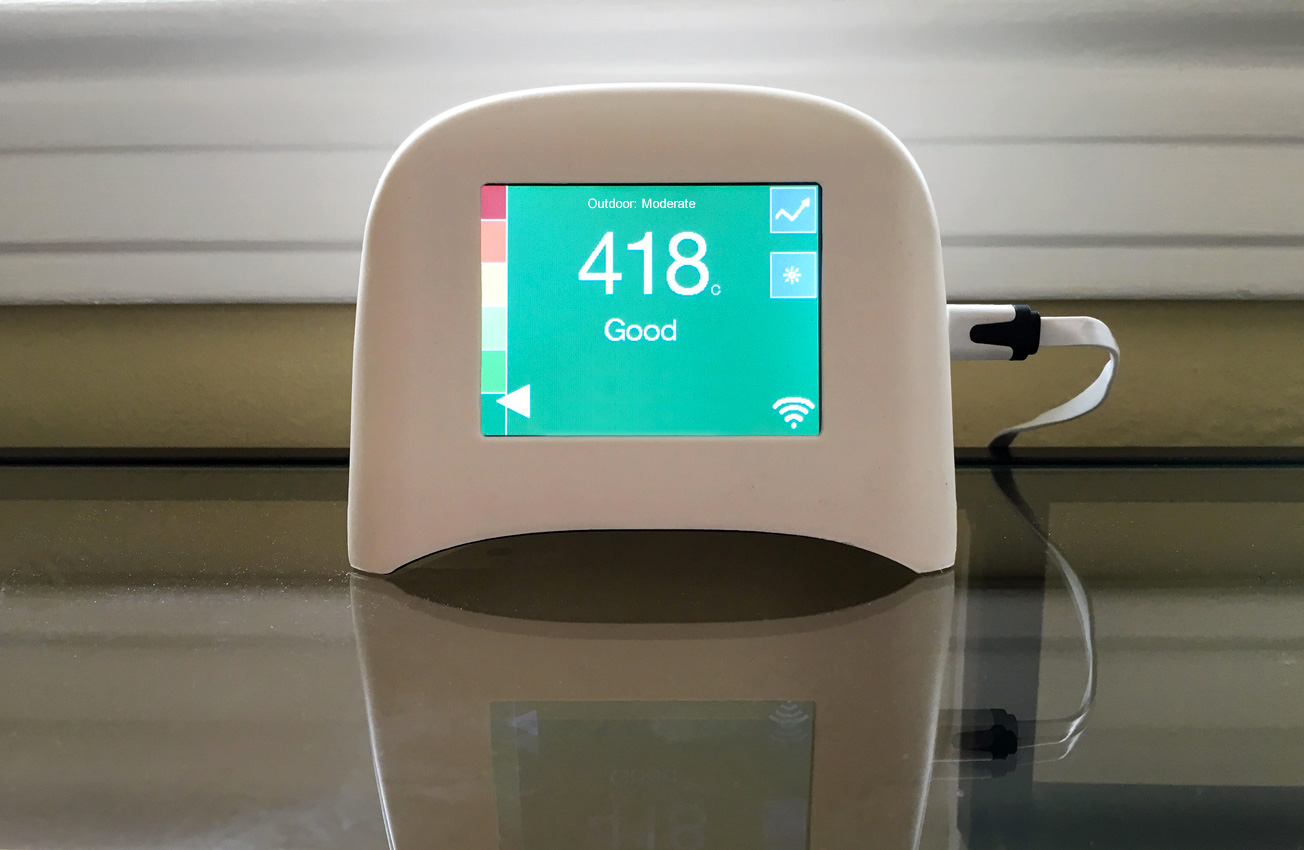
Airviz Inc. and the CREATE Lab of Carnegie Mellon University’s Robotics Institute developed Speck™, a small device that helps detect fine particulate matter in your indoor environment. 

Image via: www.specksensor.com
Clairton resident Cheryl Hurt, who owns a child daycare center, finds it particularly (no pun intended) helpful in a neighborhood located next to a coke plant. Speck allows her to determine when it is and isn’t a good day for the kids to go outside.

In addition, Clairton School District is one of the handful of schools that adopted a Speck and will have them available to check out from their library. With these Specks readily accessible, science and math teachers can use the sensors to teach air quality and statistics to their students through provided curricula.

Learn more from the CREATE Lab director, Illah Nourbakhsh. 


AIR MONITORING: BIKE EDITION

In addition to the Speck, Group Against Smog and Pollution (GASP) is studying particulate matter hotspots in Pittsburgh and you could help in the process! It’s a fairly simple commitment that involves strapping an air monitoring device on your bike while following a specific protocol. 

Image via: GASP
Once the equipment is attached to your bike, continue on your daily commute and GASP will then gather the obtained data to see where the problem areas in Pittsburgh are located, and suggest ways for improvement for your route. 

See what pollution has already been recorded from previous bikers.

REGIONAL AIR MONITORING

Do you notice the difference in air quality from day to day? Can you see it in the gif of the North Shore below? The Breathe Cam, a project of CMU's CREATE Lab in partnership with the Breathe Project, gives a regional view of air quality and shows comparisons of clear days and hazy days when fine particulate matter in the air is higher. 


The Breathe Project explains the science behind what we see, smell, and breathe each day and ways individuals, businesses, and governments can get involved to improve air quality for the region. The site's Breathe Meter also provides a side-by-side comparison of how Pittsburgh stacks up against cities throughout the nation in terms of air quality. Next time you notice a hazy sky, check out this resource. It might be pollution, not be your Instagram filter, that makes the skies look grey and tan instead of blue. 


What does this rise in technology and crowdsourcing mean?
This rise of technology and how organizations utilize new hands-on innovation tools could mean more than creating a general interest in environmental issues for citizens. It could have actual impact on environmental regulations. Seeing actual metrics and visuals before our eyes instead of what seemed to be intangible, invisible issues like air pollution will make us realize there IS a problem and we CAN do something about it. 

While the legislative process can seem tedious and lagging, especially with pressing environmental issues that need immediate action, these accessible tools can help us engage in these environmental issues without the slow assistance of government. This year, vow to be informed on what is going on around you in your own community and be a part of the solution! And who knows what technologies will be in store for the future.

Are you already using these tools or others? 
Let us know.

Do you suspect poor air quality in your area?
We want to hear your story.

Annie Regan is the western Pennsylvania outreach coordinator for PennFuture and is based in Pittsburgh. She tweets @MsAnnieRegan.  


Thursday, September 17, 2015

What’s the state of Pennsylvania's air?

This is the second post in a four-part blog series on air quality.

Now that you have a solid understanding of air pollutants it’s time to look at what is in the air you (yes, you) are breathing at home. We compiled data from the U.S. Environmental Protection Agency for eight cities throughout Pennsylvania and put it into an interactive infographic. Check out how your region stacks up!

If you don’t live in Pennsylvania or are just curious to see how other cities in the USA compare, our friends at the Breathe Project (based in Pittsburgh) have created an interactive Breathe Meter. As you can tell, there’s still a lot to clean up in order to make sure the air we’re breathing isn’t harming our health.

Stay tuned for the next post in this series to find out who makes the standards and how they were established.

Nicole Catino is Penn Future’s 2015 Student Conservation Association Green Cities Sustainability Fellow and is based in Pittsburgh. 

Thursday, August 27, 2015

This will NOx your SOx off!

This is the first in a multi-part series on air quality.

What will NOx my SOx off, you ask? Well it’s this blog series on air quality, of course! For the next four weeks we will bring you lots of pictures and infographics to illustrate various aspects of air quality and why it’s important to care about the air you breathe.

We will cover the following topics:

1. Introduction to blog series and air pollutants
2. What Pennsylvania’s air looks like now
3. Different air quality standards and how they came about
4. Steps you can take to improve our air

First off, what exactly is air pollution? In short, it's the stuff that comes out of car tailpipes, industrial combustion stacks, and from aerosol cans, for example. Tiny particles, gases, and vapors are breathed deep into the lungs where they can make people sick. 

To understand air pollution, it helps to understand the key players. Let's stop here to look at some common air pollutants, where they come from, what their chemical composition is, and how they impact humans. For starters, NOx refers to any nitrous oxides, be it NO, NO2, NO3, etc. The same goes for sulfur oxides SO, SO2, SO3, etc. Each of the various oxides are emitted from the same pollution sources, but NO2 and SO2 are the most prevalent. 

One common form of air pollution is ground level ozone pollution (commonly referred to as smog), which forms when NOx emissions combine with volatile organic compounds in the presence of sunlight. In Pittsburgh, we see days where there is so much ozone pollution in the air that people with heart conditions, asthma and other lung diseases are unable to go outside.

Check out the infographic to learn more!

Nicole Catino is Penn Future’s 2015 Student Conservation Association Green Cities Sustainability Fellow and is based in Pittsburgh. 

Wednesday, February 12, 2014

Toxic overload

As Allegheny County air quality monitors edged into the red, unhealthy zone on Tuesday, the Group Against Smog and Pollution (GASP) and members of a multi-group collaborative (including PennFuture) prepared for a press teleconference about air pollution. The teleconference was aimed at stopping Shenango's Neville Island Coke Works from continuing to dump toxic chemicals into the air. The facility is one of the region's biggest polluters and, thus far, efforts to hold the plant responsible for its illegal emissions have failed to protect the many residents who live in Ben Avon, Avalon, Bellevue, Emsworth and beyond.

Source: www.airnow.gov
Coke oven emissions

The U.S. Environmental Protection Agency (EPA) describes coke oven emissions as "among the most toxic of all air pollutants." The plants dump known carcinogens into the air along with unhealthy particle pollution that can lead to asthma and other severe health problems.

Enough is enough. 

Shenango Coke Works violated air quality regulations on 330 of the last 432 days. On February 6, GASP issued Shenango a 60-day notice of intent to sue under the Clean Air Act.

The notice, along with the teleconference and press release issued today, make it clear that citizens and environmental organizations won't sit back while pollution prevention laws are broken and the air we breathe makes Allegheny County residents sick.

Valessa Souter-Kline is western Pennsylvania outreach coordinator for PennFuture, based in Pittsburgh.